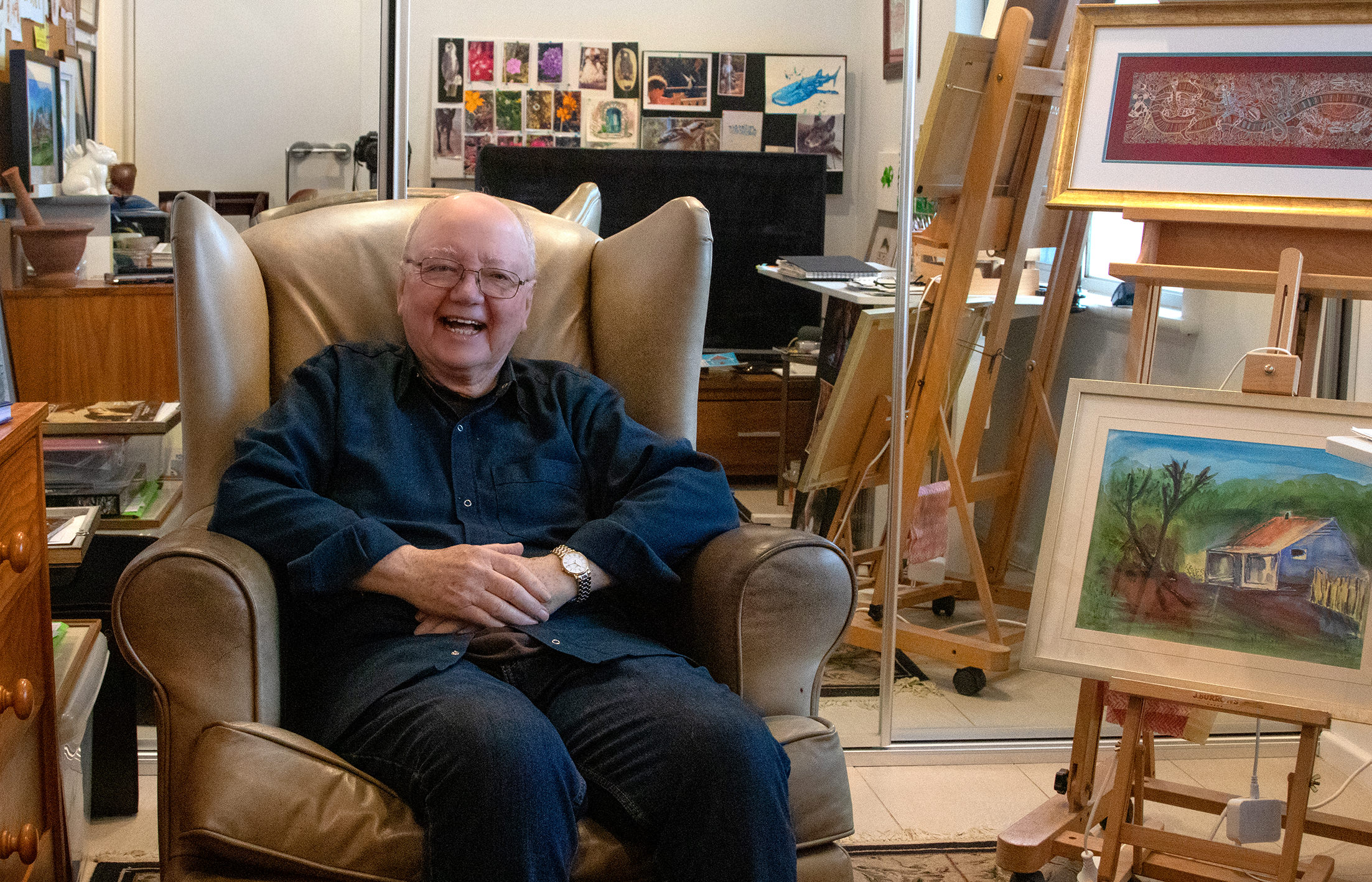
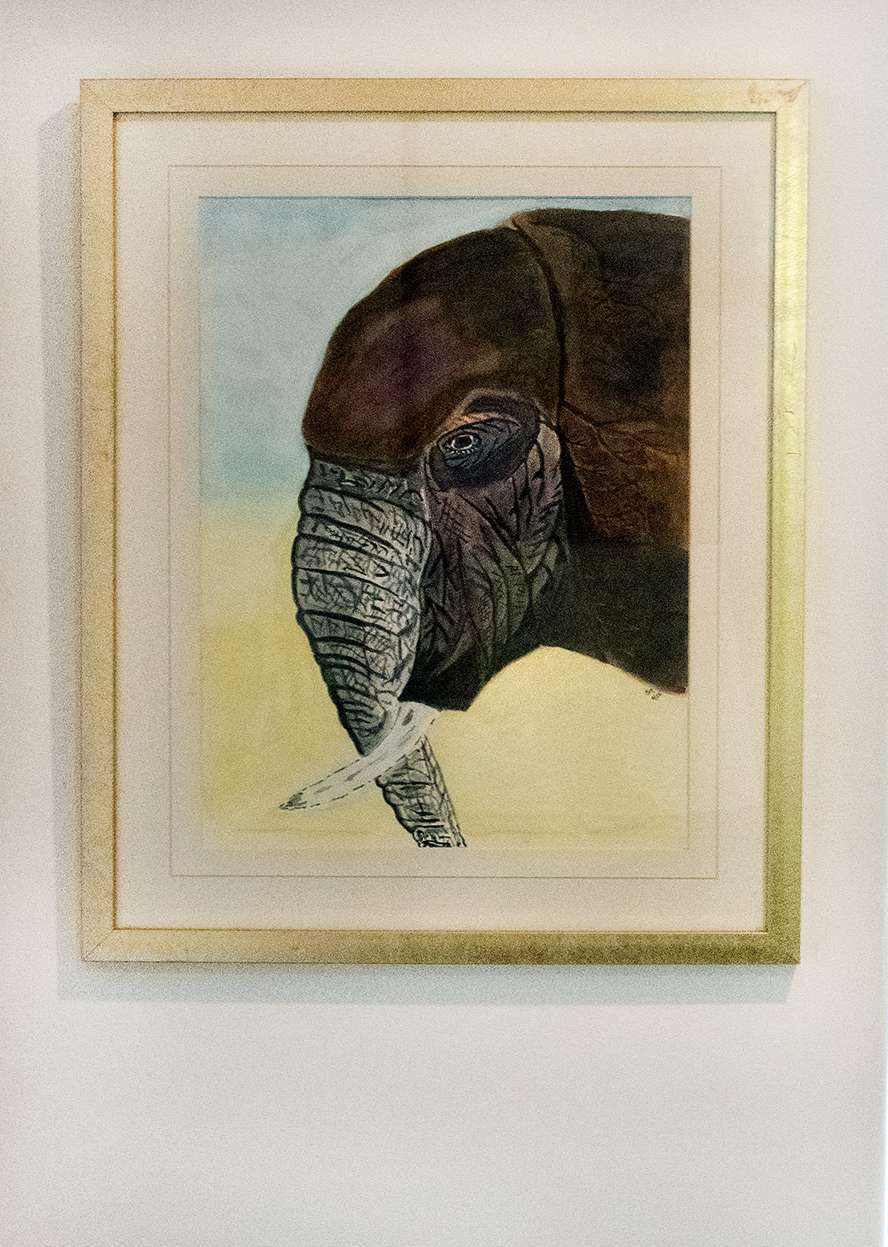
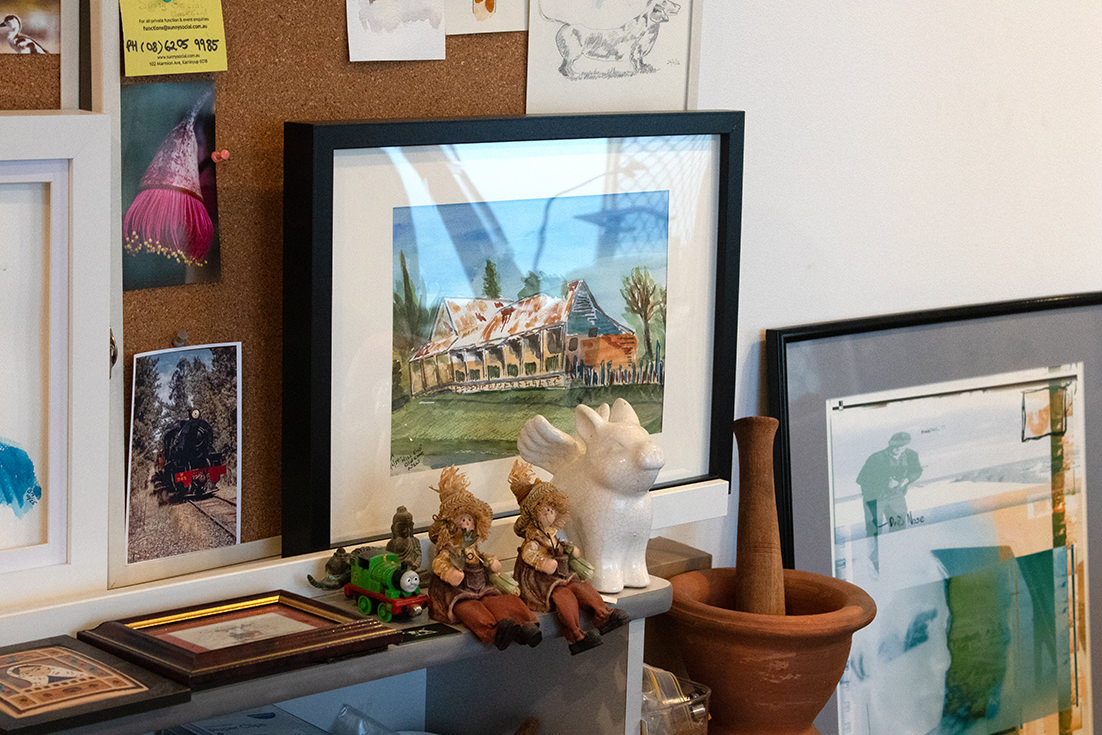
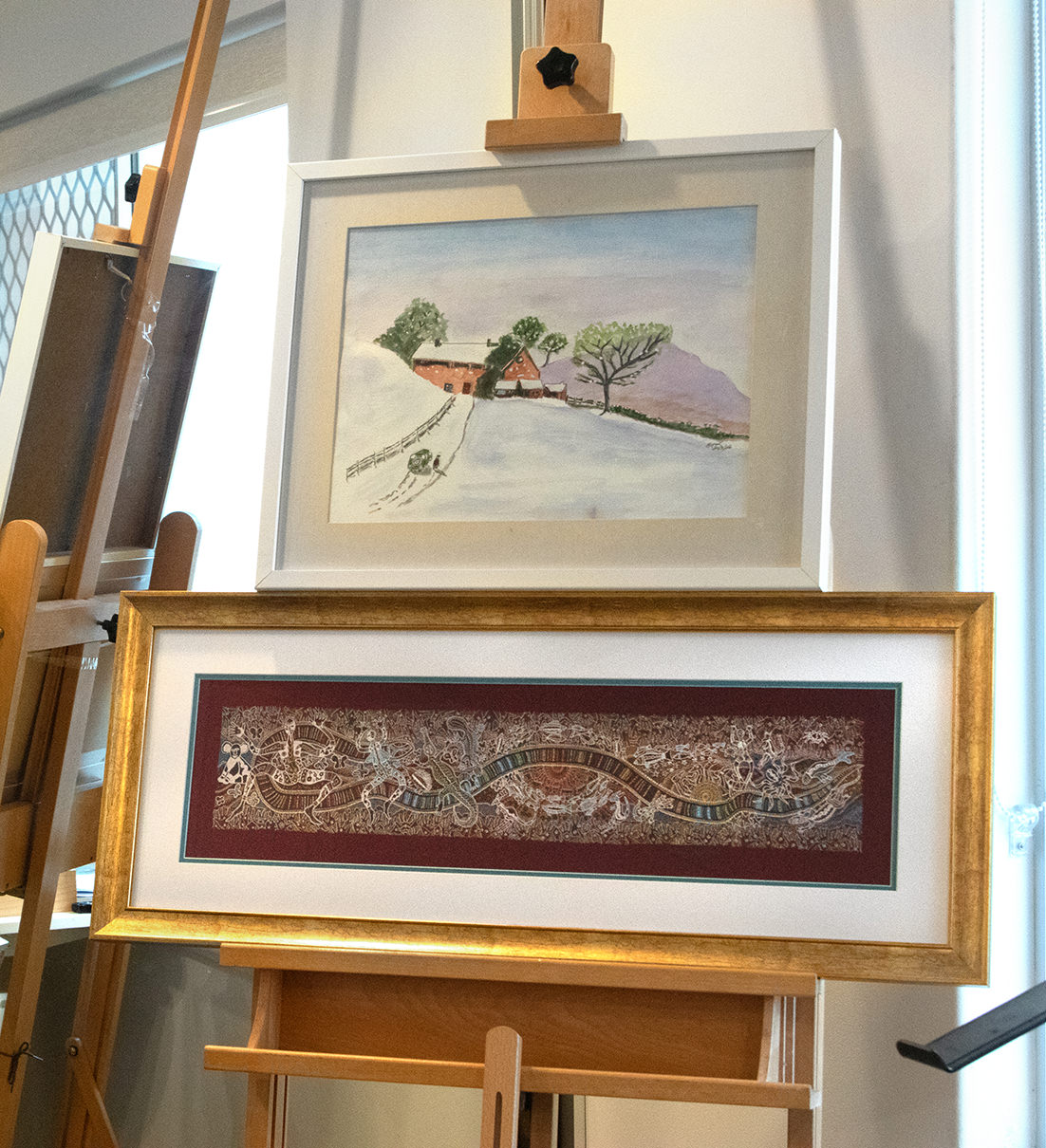
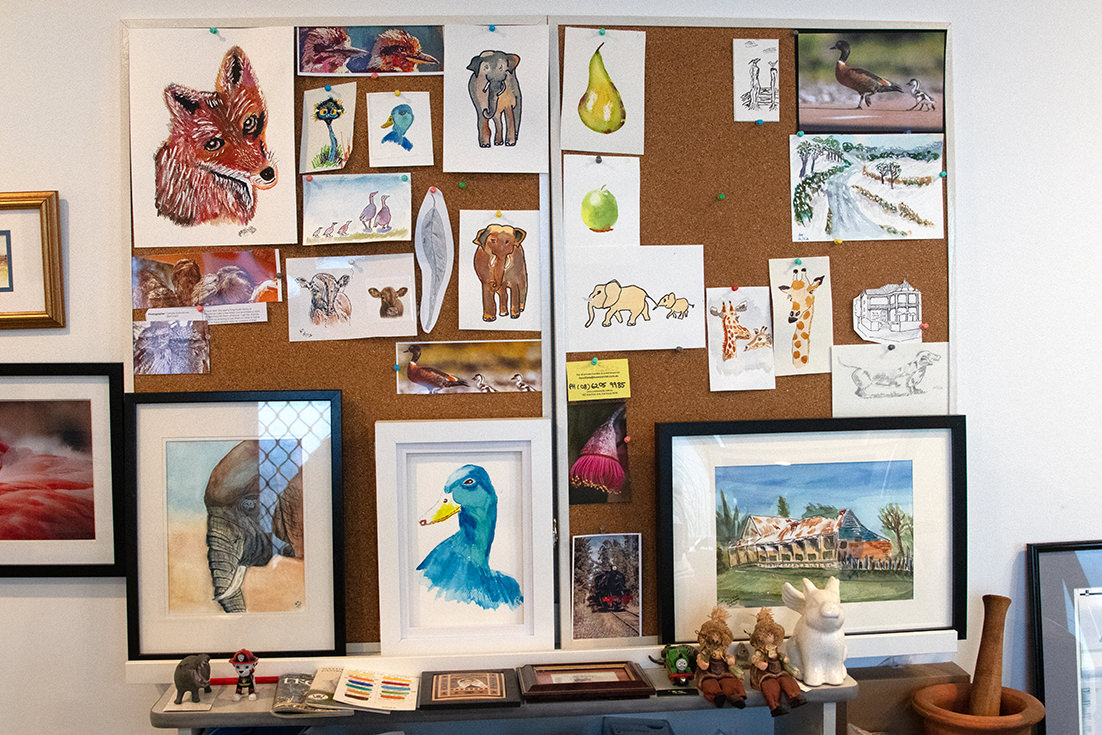
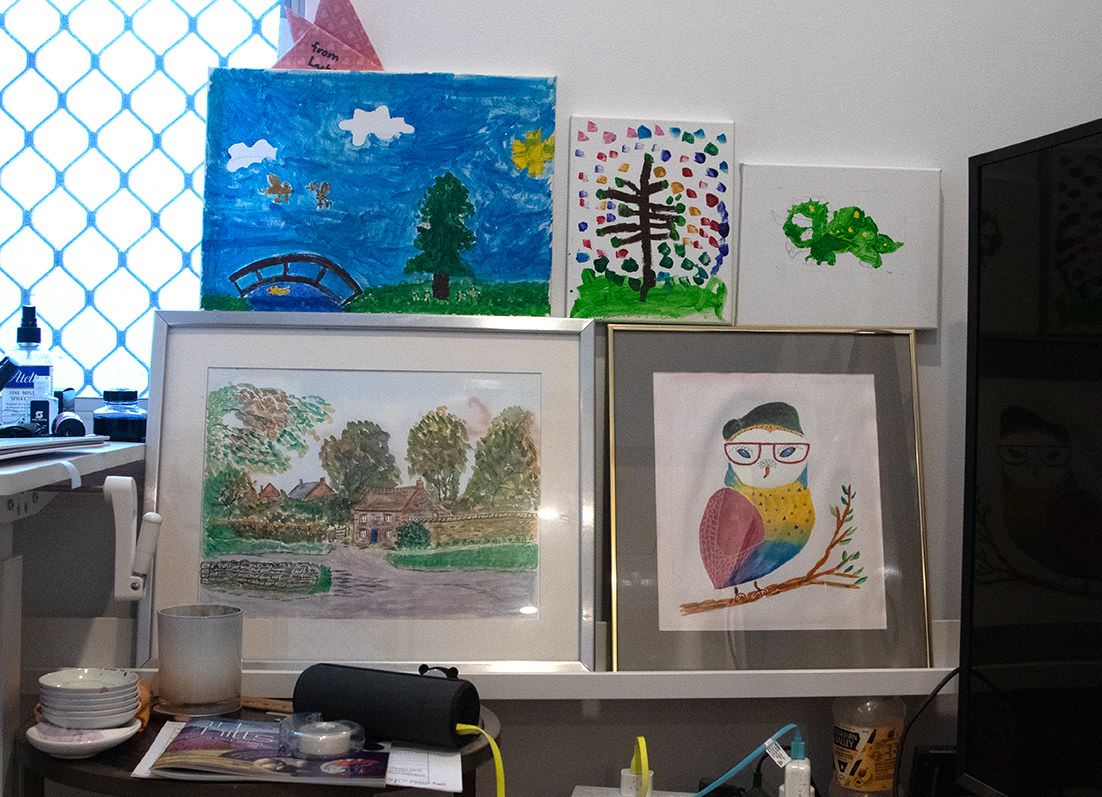
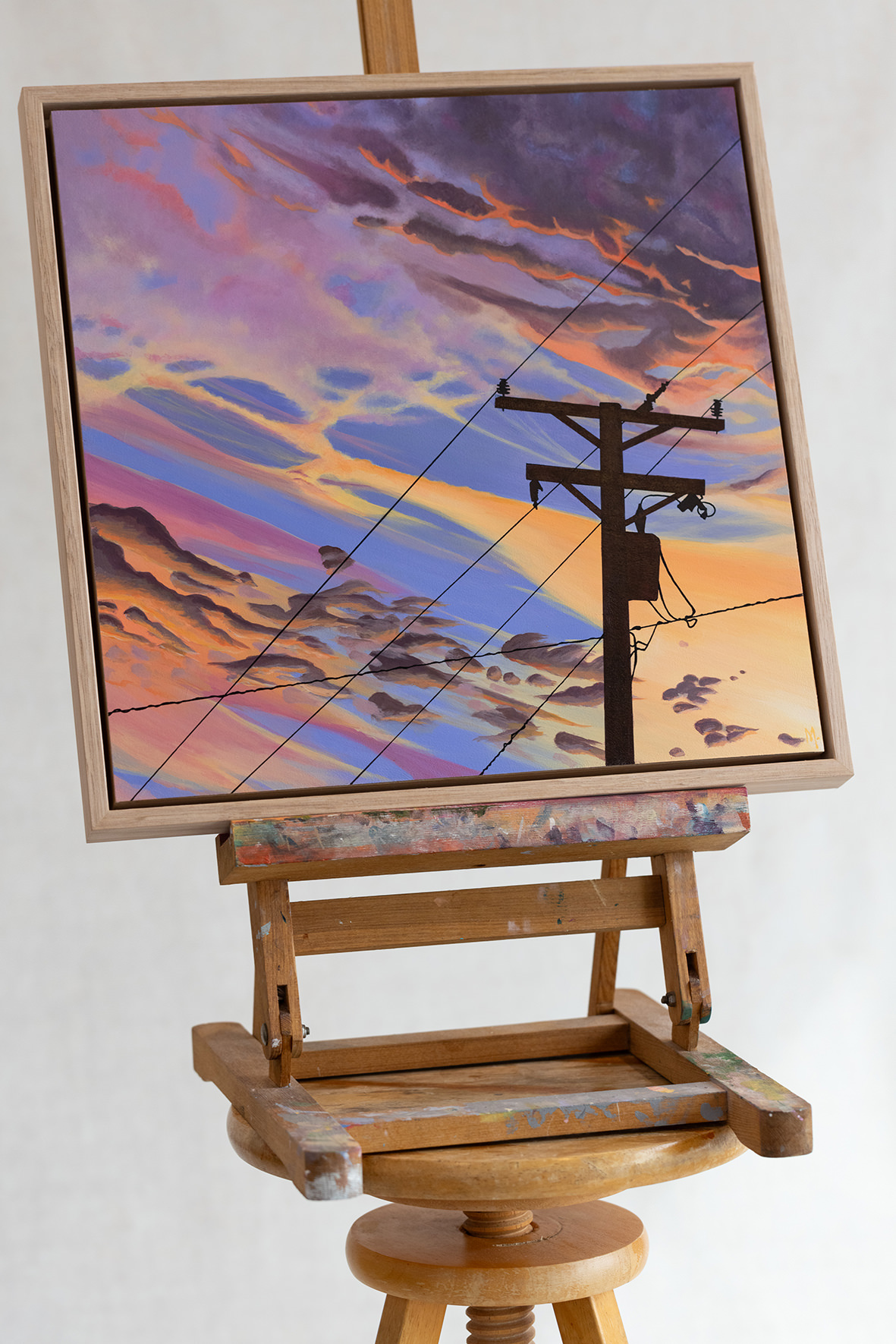
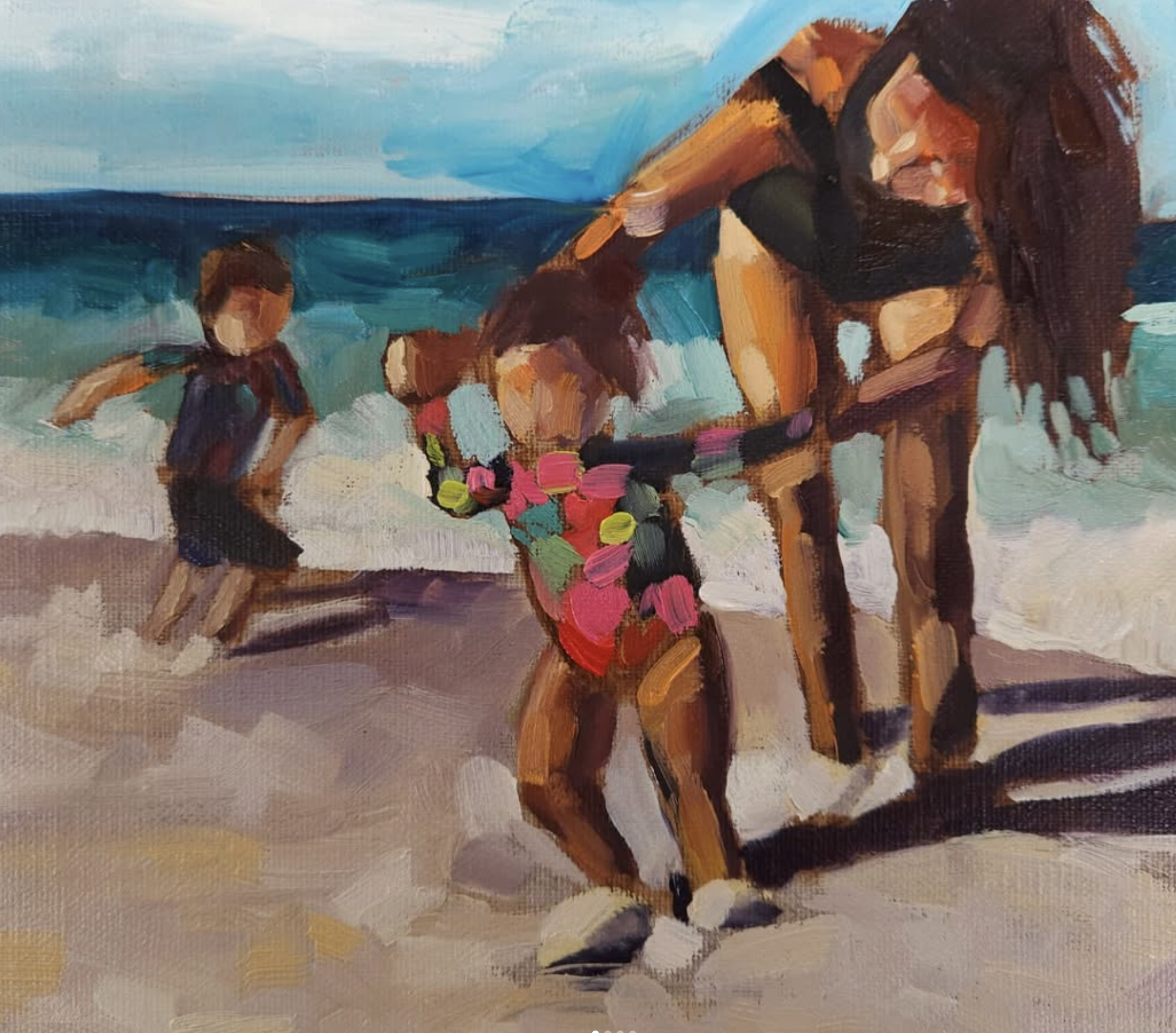
When you walk into Pop Bernie’s home, the walls tell a vibrant, local story. The hallway is lined with blown-up photographs of verge flowers and busy bees. In his studio, there are delicate watercolours of landscapes, loose urban sketches of Parisian cafes, and quirky drawings made purely to make a child laugh—like a wildly extended “limousine” sausage dog.
Looking at this prolific output, you might assume Bernie (now 78) spent a lifetime standing at an easel. In truth, he was never creative as a child, nor throughout his working life. He had never picked up a paintbrush until five years ago, when the life-altering experience of a stroke forced him to find a new way to navigate the world.
A Stroke, a Stroll, and a Secret
In the aftermath of his stroke, Bernie faced right-sided weakness and a challenging recovery. Traditional seated meditation, often recommended for healing, felt impossible. “I couldn’t do a 20-minute meditation because I just couldn’t,” Bernie explains. “You’re not meant to be processing anything, but you still need your brain to be working.”
Instead, he found his peace in “walking meditations”—strolling with his eyes wide open through local spots like Herdsman Lake and Jack Adder Lake. He began to truly look at the trees, the changing seasons, and the hidden wildlife, like a family of Tawny Frogmouth owls nestled in the bush that he would have otherwise walked right past.
As part of his speech pathology and motor recovery, Bernie was encouraged to write every day. He joined a library writing class, which became his unlikely bridge into visual art. The very first words he penned were profoundly prophetic:
When he finally decided to try his hand at painting, he kept it a complete secret. He had recently undergone knee surgery and needed to attend physiotherapy every fortnight. He realised he could quietly slip into an art class while he was out for his appointments.
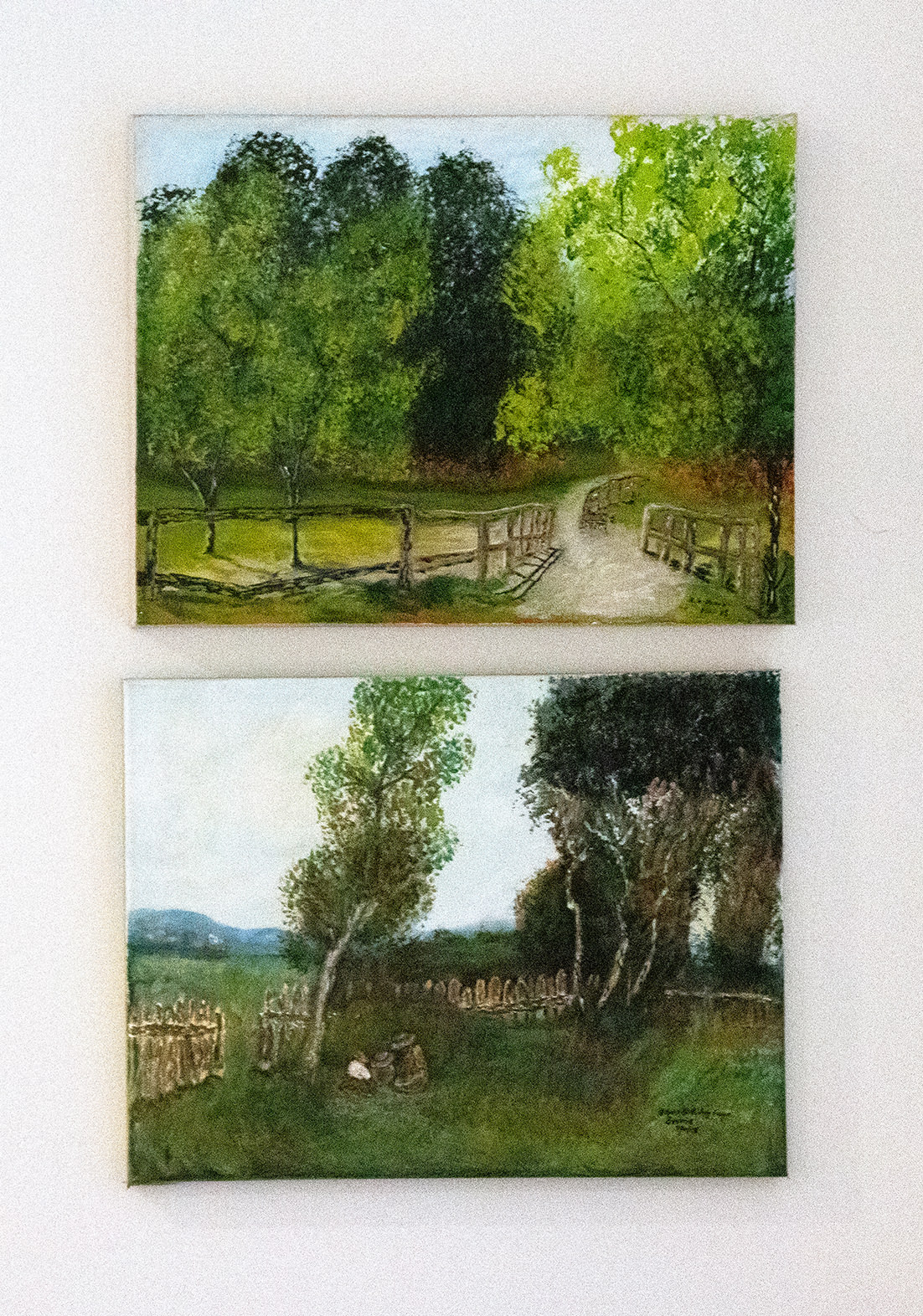
Over six to eight weeks, he painstakingly worked on his very first piece—an acrylic painting inspired by the Heidelberg School in Victoria. He presented it to his wife, Faye, for her 70th birthday.
Breaking Down the Brain to Truly "See"
Though Bernie started with acrylics, he soon transitioned entirely to watercolours. The medium demanded finer, more deliberate strokes, which forced him to slow down and helped rehabilitate the lingering weakness on his right side. But mastering the brush was only half the battle; Bernie had to learn how to look at the world all over again. During one of his early outdoor classes overlooking Point Walter, his instructor—a retired GP—walked over to observe his progress. She asked him what he was painting. When he pointed to the landscape, she gently challenged him: "Where's that tree over there? Or this thing here?" Bernie looked at his canvas and realised his trees looked nothing like the ones across the water.
That lesson became the cornerstone of his art. Bernie never traces or copies pictures. He hand-draws everything, accepting the wobbly lines of urban sketching and the beautiful imperfections of the process. He works out of sketchbooks, and watercolour papers, and firmly believes that if you do the work, your own unique style will naturally reveal itself.
A Table Set for Connection
While art began as a tool for personal recovery, it has blossomed into a profound way to connect with his grandchildren. Whenever they visit, Bernie sets out drawing pads and their favourite pens on the dining table. It instantly creates a shared space of quiet, focused joy. This creative space has been especially meaningful for his relationship with his grandson, Noah, who has Level 3 Autism.
"Noah loves maps," Bernie says, his voice filled with pride as he turns the pages of a sketchbook to reveal incredibly creative, hand-drawn maps of Europe and Africa. Without any reference material in front of him, Noah draws the coastlines of Scandinavia, points out Portugal, and colours in the exact flag of Chad from memory. He even draws Ireland noticeably larger than England—a detail that always makes the family smile.
Bernie doesn't direct their art; he simply provides the tools and the encouragement. Sometimes a grandchild will draw something, forget about it, and be amazed by their own work a week later. In his previous career, Bernie's focus was always on building up people's confidence and strengths. Now, he does that exact same work around the table with his grandkids.
Painting the Tapestry of Life
As his confidence has grown, Bernie’s art has evolved from capturing landscapes to capturing stories. His sketchbooks hold reflections on the state of the world he is leaving behind for his grandchildren. A vibrant sketch of Sydney Harbour on a sunny day sits in stark contrast to another piece illustrating environmental destruction and climate migration, inspired by Midnight Oil’s Beds Are Burning.
Yet, despite the depth and volume of his work, Bernie refuses to be an “artist”. He doesn’t want his work on show publicly. “I don’t want to be out front, or at the back,” he says. “I just want to walk alongside people.”
This mindset ties directly back to a memory Bernie often returns to when reflecting on his life—watching traditional tapestry artisans at work in Iran.
He noticed that the weavers do not sit facing the finished image. They sit at the back of the loom. From their vantage point, all they see is a chaotic mess of loose threads, complex knots, crossed fibres, and rough edges. Their heads are down, working together with family and community entirely focused on the mechanics of tying the next thread.
For Bernie, this became the defining metaphor for how we experience life.
For decades, we are those weavers sitting at the back of the tapestry. When you are deep in the “career and work headspace,” or in the thick of raising children and building a community, you are simply tying the knots. You are managing the daily grind, untangling sudden crises, and trying to hold threads together. From that side, life often feels messy, exhausting, and complicated. You don’t have the luxury of seeing the big picture because you are too busy weaving.
But eventually, there comes a time when you have to put the threads down and walk around to the front of the loom.
Stepping around to the front is what happens as we age, slow down, and reflect. When you look at the front of the tapestry, you finally see the image that all those chaotic, exhausting knots created. You see your life for what it was—the triumphs, the struggles, the good parts, and the not-so-good parts—and you accept it for what it is. You can’t untie the knots once they are woven, but you can step back and appreciate the entire picture.
In many ways, Bernie picking up his paintbrushes after his stroke was his moment of walking around to the front of the loom. After a lifetime of tying knots for others, he gave himself the grace to step back, truly see the world, and accept the beautiful, complex picture he had created.